Microcontroller Programming
What Is a Microcontroller?
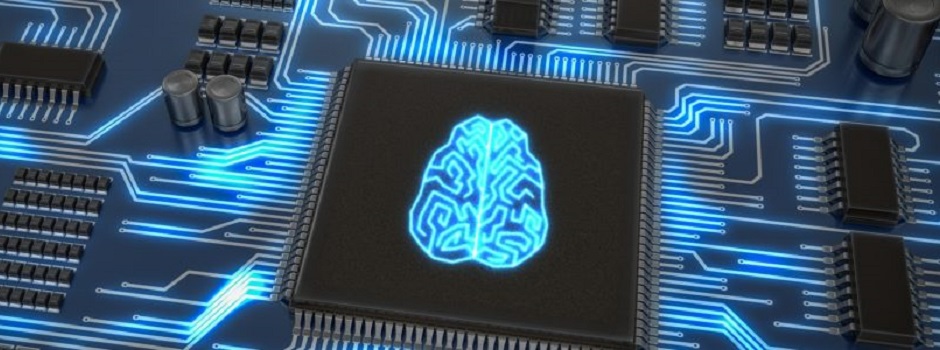
A microcontroller is a compact integrated circuit designed to govern a specific operation in an embedded system. A typical microcontroller includes a processor, memory and input/output (I/O) peripherals on a single chip.
Sometimes referred to as an embedded controller or microcontroller unit (MCU), microcontrollers are found in vehicles, robots, office machines, medical devices, mobile radio transceivers, vending machines and home appliances, among other devices. They are essentially simple miniature personal computers (PCs) designed to control small features of a larger component, without a complex front-end operating system (OS).
How do microcontrollers work?
A microcontroller is embedded inside of a system to control a singular function in a device. It does this by interpreting data it receives from its I/O peripherals using its central processor. The temporary information that the microcontroller receives is stored in its data memory, where the processor accesses it and uses instructions stored in its program memory to decipher and apply the incoming data. It then uses its I/O peripherals to communicate and enact the appropriate action.
Microcontrollers are used in a wide array of systems and devices. Devices often utilize multiple microcontrollers that work together within the device to handle their respective tasks.
For example, a car might have many microcontrollers that control various individual systems within, such as the anti-lock braking system, traction control, fuel injection or suspension control. All the microcontrollers communicate with each other to inform the correct actions. Some might communicate with a more complex central computer within the car, and others might only communicate with other microcontrollers. They send and receive data using their I/O peripherals and process that data to perform their designated tasks.
What are the elements of a microcontroller?
The core elements of a microcontroller are:
- The Processor (CPU) -- A processor can be thought of as the brain of the device. It processes and responds to various instructions that direct the microcontroller's function. This involves performing basic arithmetic, logic and I/O operations. It also performs data transfer operations, which communicate commands to other components in the larger embedded system.
- Memory -- A microcontroller's memory is used to store the data that the processor receives and uses to respond to instructions that it's been programmed to carry out. A microcontroller has two main memory types:
- Program memory, which stores long-term information about the instructions that the CPU carries out. Program memory is non-volatile memory, meaning it holds information over time without needing a power source.
- Data memory, which is required for temporary data storage while the instructions are being executed. Data memory is volatile, meaning the data it holds is temporary and is only maintained if the device is connected to a power source.
- I/O Peripherals -- The input and output devices are the interface for the processor to the outside world. The input ports receive information and send it to the processor in the form of binary data. The processor receives that data and sends the necessary instructions to output devices that execute tasks external to the microcontroller.
While the processor, memory and I/O peripherals are the defining elements of the microprocessor, there are other elements that are frequently included. The term I/O peripherals itself simply refers to supporting components that interface with the memory and processor. There are many supporting components that can be classified as peripherals. Having some manifestation of an I/O peripheral is elemental to a microprocessor, because they are the mechanism through which the processor is applied.
Other supporting elements of a microcontroller include:
- Analog to Digital Converter (ADC) -- An ADC is a circuit that converts analog signals to digital signals. It allows the processor at the center of the microcontroller to interface with external analog devices, such as sensors.
- Digital to Analog Converter (DAC) -- A DAC performs the inverse function of an ADC and allows the processor at the center of the microcontroller to communicate its outgoing signals to external analog components.
- System Bus -- The system bus is the connective wire that links all components of the microcontroller together.
- Serial Port -- The serial port is one example of an I/O port that allows the microcontroller to connect to external components. It has a similar function to a USB or a parallel port but differs in the way it exchanges bits.